
How Do Smart Security Systems Work?
- Adam Jakab
- May 27
- 6 min read
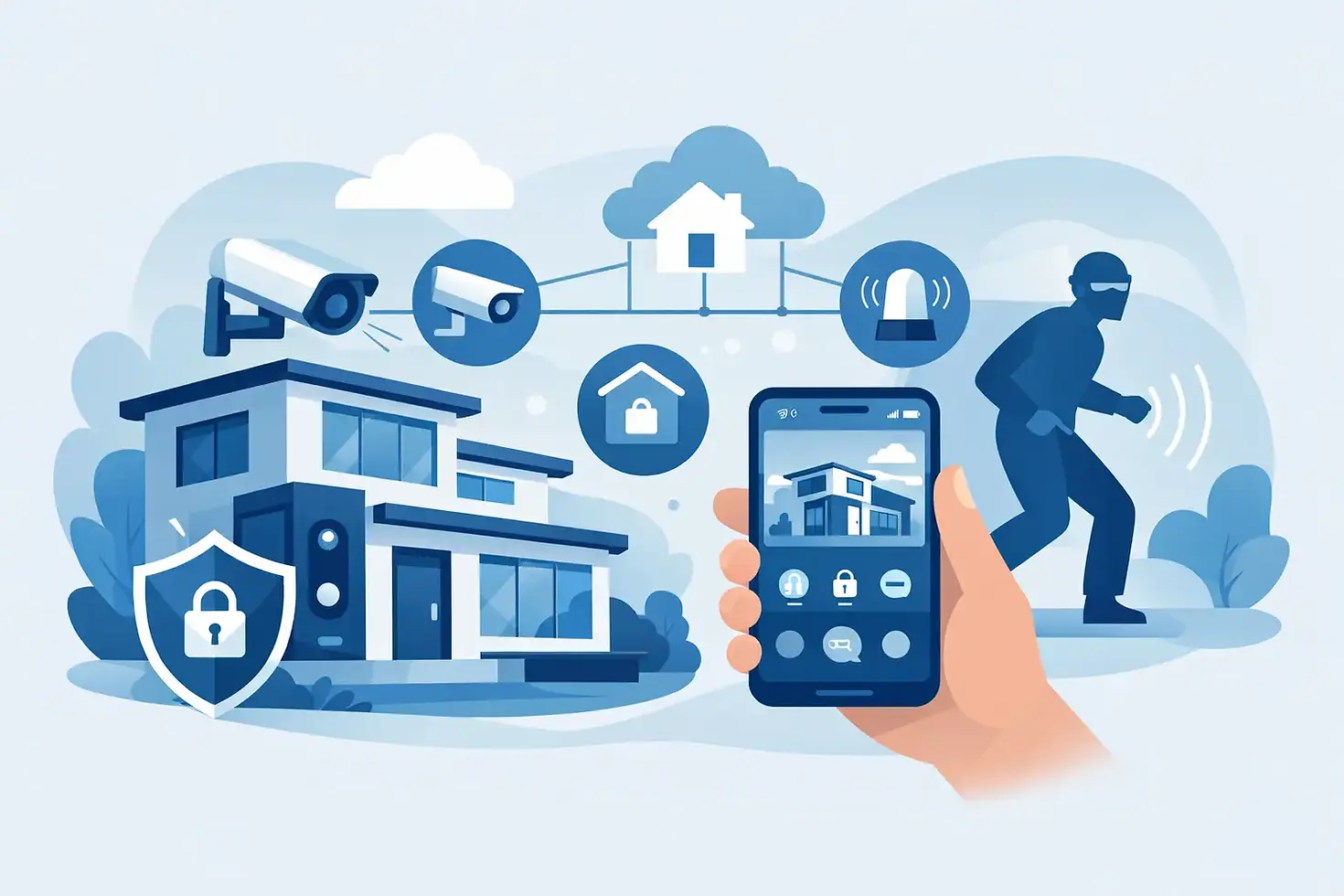
A door contact trips at 2:13 a.m. A camera catches movement near a fenced yard. A mobile alert goes out instantly, and depending on the setup, a monitoring team can verify the event and take action right away. That is the practical answer to how do smart security systems work - they connect devices, software, and human response so a threat can be detected early instead of after the damage is done.
For property owners, site managers, and homeowners, that difference matters. A basic alarm may simply make noise after a break-in starts. A smart security system is built to recognize activity, send information in real time, and support a faster response. The technology can be sophisticated, but the goal is simple: reduce blind spots, shorten response time, and give you more control over what is happening on your property.
How do smart security systems work in real time?
At the core, a smart security system is a network of connected devices. Those devices typically include cameras, motion sensors, door and window contacts, glass-break detectors, smart locks, alarm panels, sirens, and mobile apps. In commercial settings, you may also see access control, gate integration, environmental sensors, and live video monitoring layered on top.
Each device gathers a different kind of information. A door sensor reports whether an entry point is opened or closed. A motion detector looks for movement within a defined area. A camera provides visual verification. A smart panel or hub acts like the system's control center, receiving signals and deciding what happens next based on rules that have already been set.
Those rules are what make the system smart. If a warehouse door opens during business hours, that may be normal. If it opens at 1 a.m. and a nearby camera also detects motion, the system can treat that as a higher-priority event. It can trigger a siren, send a push notification, capture footage, alert a monitoring center, or do all of those things at once.
This is where smart security starts to separate itself from older alarm systems. Traditional systems often rely on a simple trigger-and-alert model. Smart systems add context. They connect multiple signals, automate responses, and let users or monitoring professionals review events as they happen.
The main parts of a smart security system
Most systems rely on four working layers: detection, communication, verification, and response.
Detection is the starting point. Sensors and cameras watch for changes in the environment, such as motion, forced entry, smoke, temperature shifts, or unauthorized access. The quality of this layer matters more than many buyers realize. A poorly placed motion sensor or low-quality camera can create constant nuisance alerts or miss the event entirely.
Communication is what moves those signals from the field to the system. Depending on the setup, devices may communicate through Wi-Fi, cellular, hardwired connections, radio frequency, or a mix of these. For higher-risk commercial sites, redundancy matters. If one communication path fails, another should still carry the signal.
Verification is where smart systems become far more useful than a simple noisemaker. Instead of treating every alert as equal, the system can confirm what is actually happening. A camera clip may show whether the motion was a person, an animal, weather movement, or routine staff activity. In a monitored environment, live operators can review footage in real time and determine whether intervention is needed.
Response is the final layer. That may include sending alerts to the property owner, sounding an alarm, locking a door, activating lights, dispatching security, or contacting law enforcement when appropriate. The right response depends on the property, the risk level, and how the system has been configured.
Why cameras and live monitoring change the outcome
For many properties, cameras are the most valuable part of a smart security setup, but not just because they record video. Their real value is in verification and intervention.
A camera that only stores footage helps after an incident. A camera connected to live monitoring can help while the incident is unfolding. That distinction is especially important for construction sites, dealerships, storage facilities, and commercial yards where theft, trespassing, and vandalism often happen after hours.
If a system detects movement on a closed site, live monitoring allows trained personnel to assess the event immediately. They can determine whether it is an employee, a delivery, a false alarm, or a real intrusion. When it is a real threat, response can begin sooner. In many cases, that earlier action is what prevents loss.
This is also where buyers should be realistic. Not every property needs the same level of monitoring. A single-family home may prioritize mobile alerts, smart locks, and a professionally monitored alarm. A high-risk commercial property may need active video monitoring, perimeter coverage, audio deterrence, and backup communications. It depends on what is being protected, how exposed the site is, and how costly a delayed response would be.
How smart security systems work for homes vs. businesses
The basics are similar, but the use cases are different.
In a home, smart security is often designed around convenience as much as protection. Homeowners want to arm and disarm the system from a phone, check cameras remotely, receive alerts when doors open, and know that help can be contacted if an emergency happens while they are away. Integration with smart lighting, locks, garage doors, and video doorbells can make the system easier to use every day.
For a business or managed property, the priorities shift. Owners and operators often need better control over who enters the site, visibility across multiple areas, audit trails for access events, after-hours detection, and stronger monitoring for liability and loss prevention. A retail location, office building, storage property, and construction site all have different risk profiles, so the system should be built around operations rather than treated like an off-the-shelf package.
That is one reason custom design matters. Too many systems are sold based on device count instead of site conditions. A smaller but well-planned system usually performs better than a larger setup with poor camera placement, weak coverage, or no clear response process.
What makes a system truly smart
Marketing has stretched the word smart to cover almost anything with an app. In practice, a system is only smart if it improves awareness and speeds up useful action.
That can include automation, such as having lights turn on when motion is detected or locking specific doors at scheduled times. It can include analytics, such as recognizing unusual activity in restricted zones. It can also include integrated monitoring, where alerts are not just sent but reviewed by trained people who know what to do next.
The best systems reduce noise instead of adding to it. If your phone goes off constantly for harmless activity, people start ignoring alerts. A smarter setup filters routine events, prioritizes real risks, and makes sure the right people get the right information quickly.
Common trade-offs to understand before you buy
There is no perfect system for every property. Wireless devices are easier to install, but hardwired equipment can offer stronger long-term reliability in some settings. Cloud storage is convenient, but some businesses prefer local recording for retention control. More cameras provide broader visibility, but only if they are positioned correctly and monitored effectively.
Cost is another factor. A lower upfront price can look attractive until you find gaps in coverage, slow support, or a system that generates false alarms. On the other hand, not every site needs the most advanced setup available. The right investment is the one that matches the level of risk and gives you a clear response path when something happens.
Service also matters more than many buyers expect. Security is not just equipment on a wall. It is installation quality, monitoring standards, maintenance, troubleshooting, and how quickly you can reach someone when there is a problem. For many Manitoba property owners, working with a local provider like Guardian Advanced Solutions means those conversations happen faster and with people who understand the property risks in the area.
How do smart security systems work best?
They work best when the technology, monitoring, and response plan are built together. A strong system does not rely on one sensor, one camera, or one notification. It layers protection so that if one device detects something, another can verify it, and a person or process is ready to respond.
That is why the smartest question is not just what equipment should be installed. It is what should happen next when that equipment detects a problem. If the answer is clear, tested, and backed by reliable monitoring, the system is doing what it should.
Security works best when it feels quiet in the background and decisive when it counts. If you are evaluating a system for a home, business, or high-risk site, focus on how quickly it can turn detection into action - because that is what protects property when the moment is real.


Comments