
How Live Video Monitoring Prevents Theft
- Adam Jakab
- 6 days ago
- 5 min read
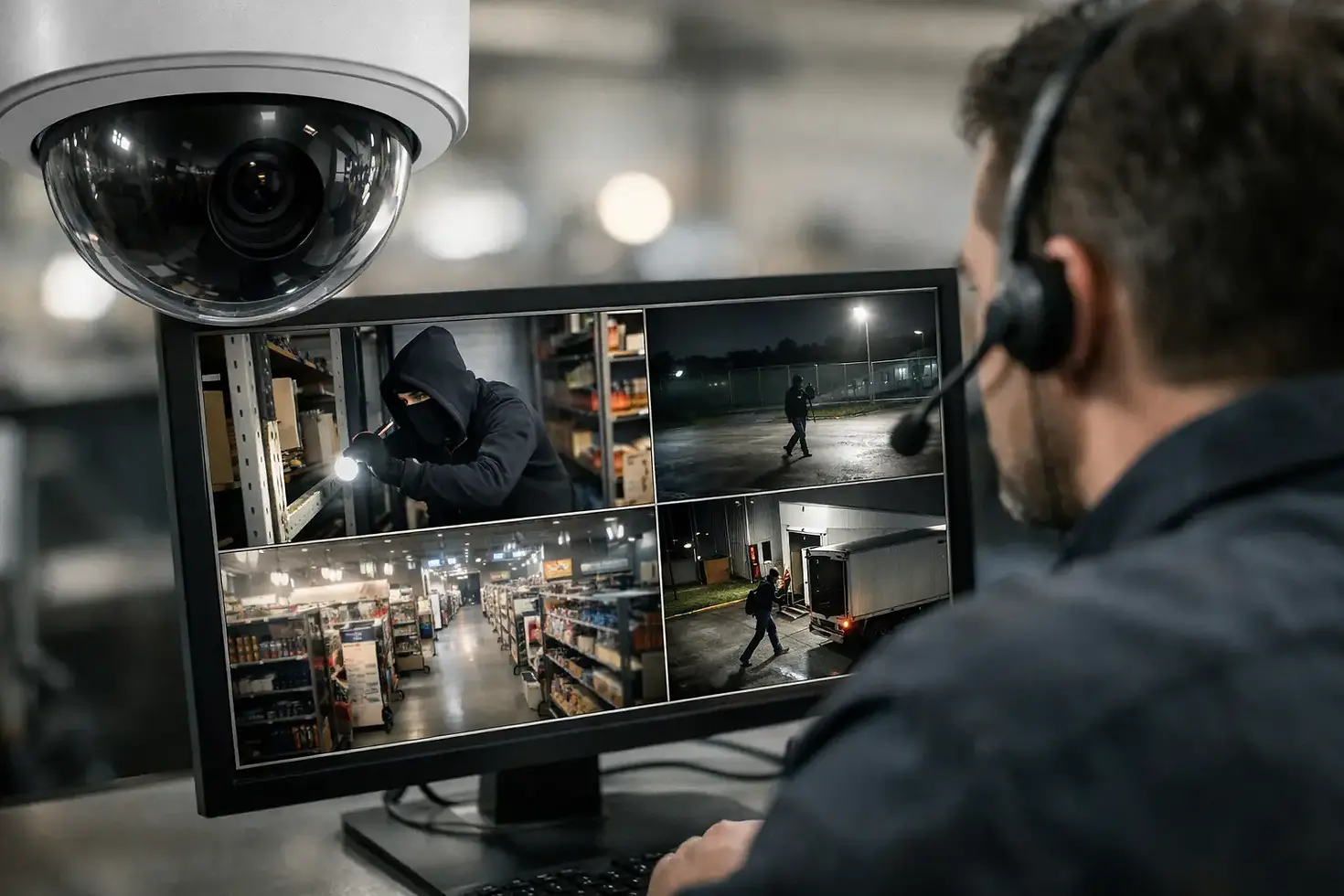
A camera that records a theft after the fact may help identify what was lost. A live monitoring program can help stop the loss before it happens. That is the practical difference in how live video monitoring prevents theft: trained people actively watch for suspicious activity, verify a threat, and take action while there is still time to protect the property.
For Manitoba business owners, property managers, site operators, and homeowners, this matters most when a property is empty, lightly staffed, or difficult to supervise after hours. Construction equipment, dealership inventory, storage units, vacant commercial spaces, and residential properties can all become targets when offenders believe no one is watching. Live video monitoring changes that assumption.
How Live Video Monitoring Prevents Theft in Real Time
Traditional video surveillance is primarily investigative. Cameras capture footage, and someone reviews it after an alarm, a break-in, or a missing-item report. That footage can be valuable, but it does not prevent the initial loss. By the time anyone sees the video, a thief may be gone with tools, materials, vehicles, fuel, or personal property.
Live monitoring adds a human decision-maker to the system. When cameras detect movement or an unusual event, trained monitoring personnel assess the live feed. They can distinguish between expected activity - such as an employee arriving early, a delivery driver at a designated entrance, or a contractor on site - and behavior that requires intervention.
Once a threat is verified, the response can begin immediately. Depending on the site plan and event, that may include issuing a live audio warning through speakers, contacting a designated site representative, dispatching mobile security, or requesting police response. The goal is not simply to document a crime. It is to interrupt it.
That response sequence also reduces false alarms. A motion alert alone cannot tell the difference between a person entering a restricted area and wind moving debris across a lot. Human verification helps ensure that a real concern receives attention without creating unnecessary calls, disruption, or response costs.
Presence Is Often the Strongest Deterrent
Theft is often opportunistic. A person sees an open gate, an unlit loading area, a poorly supervised property, or equipment left outside overnight. They make a quick judgment that they have time to act without being confronted.
Visible cameras, posted monitoring notices, security lighting, and mobile security trailers make that judgment harder. A live voice warning makes it harder still. When someone hears that they are being observed and instructed to leave, the property no longer feels unattended. Many incidents end at that point, before a fence is cut, a door is forced, or equipment is moved.
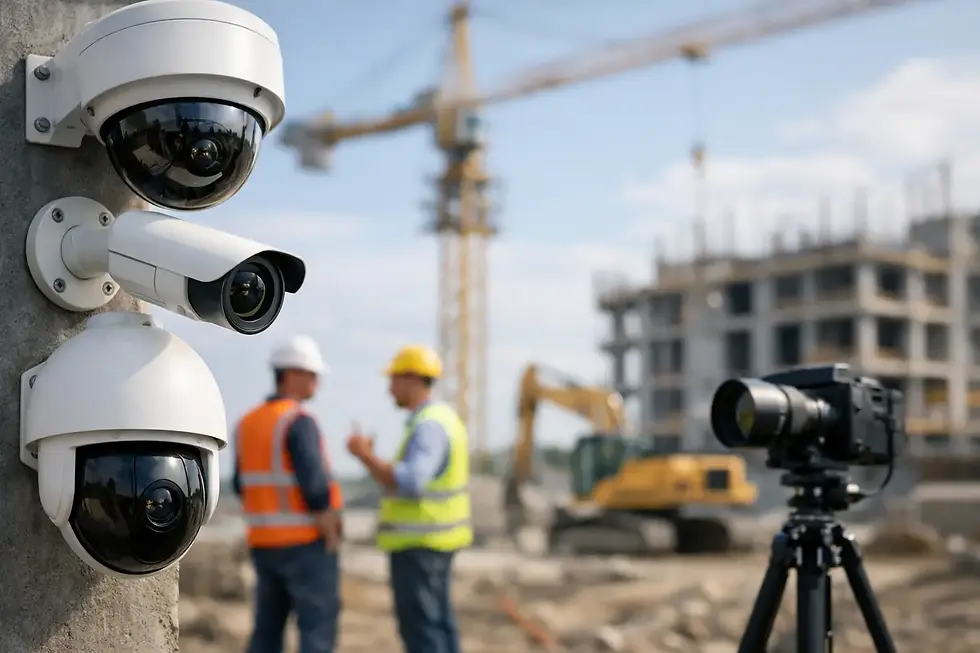
Deterrence is especially valuable on construction sites. Tools, copper, fuel, generators, compact equipment, and building materials can be expensive to replace, but the larger cost may be downtime. A stolen piece of equipment can delay a crew, disrupt subcontractors, and push back a schedule. Active monitoring helps protect the workday that follows, not just the asset itself.
The same principle applies to vehicle dealerships and storage facilities. A person walking a lot after closing may be testing access points or looking for an easy opportunity. Detecting that behavior early gives security personnel a chance to intervene before it becomes a forced entry, catalytic converter theft, vehicle damage, or inventory loss.
Detection Must Be Matched to the Property
Live video monitoring is not a one-size-fits-all service. A camera placed in the wrong location can create blind spots, excessive alerts, or footage that does not show the details needed to verify an event. Effective protection begins with understanding what must be protected, when it is most vulnerable, and how people normally move through the site.
For a construction site, priority areas may include equipment storage, fuel tanks, material stacks, site entrances, and perimeter access points. For a multi-tenant commercial property, the focus may be parking areas, loading docks, rear doors, shared corridors, and dumpster enclosures. At a home, it may be the driveway, garage, backyard gate, and main entry points.
Lighting also affects results. Cameras can perform well in low-light conditions, but poor lighting, glare, weather, and obstructed views can still limit what a monitoring agent can see. A professional assessment considers those conditions, along with power availability, connectivity, camera height, and the risk of tampering.
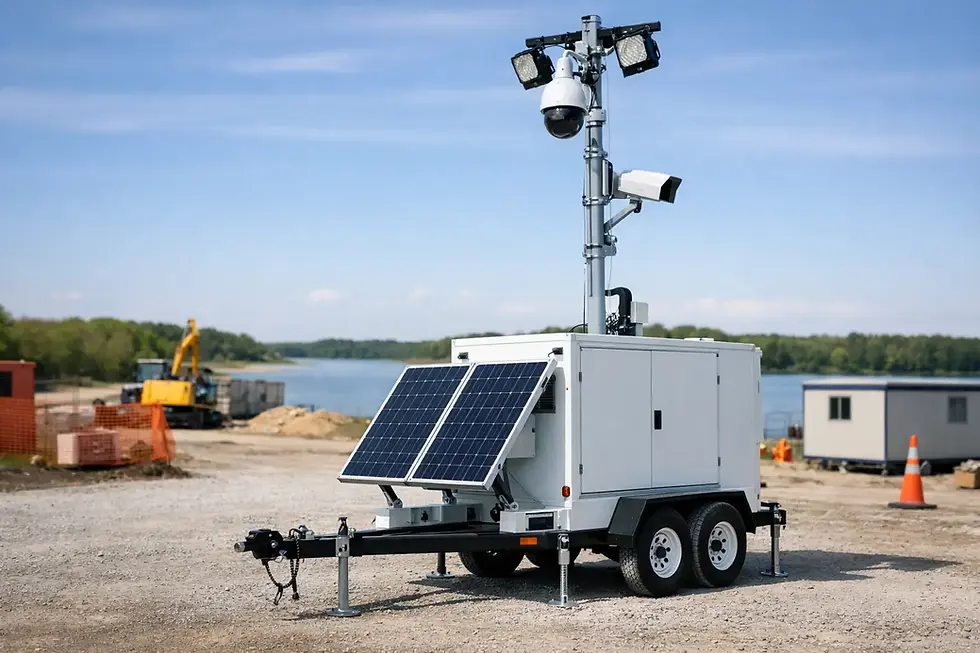
Mobile security trailers can be a practical option for temporary or changing environments. They provide a visible monitored presence where permanent infrastructure may not yet be available, such as active construction projects, seasonal sites, remote yards, or vacant properties. As a project changes, the coverage plan can change with it.
A Verified Response Is Better Than an Alarm Alone
Alarm systems remain useful. Door contacts, glass-break sensors, motion detectors, and access controls can identify possible intrusion quickly. However, an alarm signal does not always explain what is happening. Was it an employee with an incorrect code, a delivery, an animal, weather, or an actual intruder?
Video verification provides context. Monitoring personnel can review the situation in real time and relay clearer information to the appropriate responder. That can support faster, more informed decisions and reduce the frustration of sending staff to investigate every alert in the middle of the night.
There are trade-offs. Not every property needs every camera, sensor, or response option. A small office with predictable hours may need focused coverage at key entrances, while a large equipment yard may require wide perimeter visibility and active coverage of several high-value zones. The right plan depends on the property layout, the value of exposed assets, the history of incidents, and the consequences of disruption.
The most effective systems combine layers of protection. Cameras provide visibility. Live monitoring supplies judgment and intervention. Alarms and analytics create alerts. Lighting improves visibility and deterrence. Access control limits entry. Clear procedures ensure that the right people know what happens when an incident is verified.
Local Support Matters When Conditions Change
Security systems are only as dependable as the service behind them. A camera that has been blocked by a new sign, shifted during a construction phase, or affected by a network issue needs attention. A property that adds inventory, changes access hours, or experiences a new theft pattern may need its coverage adjusted.
Local support makes those adjustments more practical. Property owners should be able to speak with people who understand the area, the site, and the protection plan rather than being passed through a distant call center. Guardian Advanced Solutions builds monitored security around that accountability, with solutions tailored to Manitoba properties and higher-risk environments.
It also helps to establish clear escalation instructions before an incident occurs. Who should receive a call? Which entrances are authorized after hours? When should a site supervisor be contacted? When is a police request appropriate? These details allow monitoring personnel to respond with confidence instead of losing time trying to reach the right person.
What Property Owners Can Do Now
Start by looking at the times and places where theft would be easiest. Walk the property after dark if possible. Check whether cameras have a clear view of entry points and high-value assets. Identify gates, doors, parking areas, blind corners, and materials that can be quickly removed.
Then consider what happens after an alert. If the answer is that someone reviews footage the next morning, the property is being recorded but not actively protected. If an event is verified, challenged, and escalated in real time, the system can become a meaningful theft-prevention tool.
The strongest security plan does not rely on a thief making the right choice. It makes the wrong choice harder, more visible, and far less rewarding.

Comments