

Video Analytics for Smarter Property Protection
A camera recording an incident after the fact can help with an investigation. It cannot stop a thief from loading equipment into a truck, a trespasser from entering a restricted area, or a vandal from damaging inventory. Video analytics changes that equation by helping security teams recognize suspicious activity as it happens, so the right response can begin sooner.
For Manitoba businesses, property managers, and homeowners, that difference matters. A construction site may sit empty overnight. A dealership may have high-value vehicles exposed across a large lot. A storage facility may have dozens of access points and tenants moving through the property. These environments need more than footage to review later. They need practical, active protection.
What Video Analytics Sees That Cameras Alone Miss
Video analytics is software that interprets what a camera sees. Rather than treating every movement as equal, it can be configured to recognize defined events, such as a person entering a fenced area, a vehicle approaching a gate after hours, or an object left in a restricted location.
Traditional motion alerts are often too broad to be useful. Rain, snow, shifting shadows, headlights, wildlife, and blowing debris can all trigger them. When teams receive too many irrelevant alerts, attention drops and genuine threats are easier to miss. Analytics helps filter that noise by identifying people, vehicles, direction of travel, dwell time, and activity within defined zones.
That does not mean every alert is automatically a criminal event. Analytics identifies behavior that deserves attention. A trained live monitoring professional can then assess the situation, speak through an audio system where appropriate, notify a site contact, or coordinate a response. Technology provides speed and consistency; human judgment provides context.
How Video Analytics Supports Live Monitoring
Live monitoring is most effective when operators can focus on the events that matter. A large property with multiple cameras can generate an overwhelming amount of video. Analytics brings priority activity forward, allowing monitoring staff to investigate an alert instead of watching empty views for hours.
Consider a fenced construction site after work hours. The system can identify a person crossing into a protected zone while ignoring traffic moving along the public road. A monitoring professional can quickly review the live feed, determine whether the person is authorized, and take the next appropriate step. That may include issuing an audio warning, contacting a designated manager, or requesting law enforcement support when a verified threat is present.
This approach is proactive, not simply reactive. The goal is to interrupt suspicious activity before losses occur, rather than provide video evidence after tools, fuel, copper, or equipment are gone. For many site operators, prevention is the more valuable outcome because theft creates delays, insurance claims, replacement costs, and lost productivity that can exceed the value of the stolen item.
Video analytics also improves response quality. When an alert contains a verified person or vehicle event, responders have better information about where activity is occurring and what is happening. That can reduce confusion during a high-pressure incident and help property contacts make faster decisions.
The Right Analytics Depend on the Property
There is no single setting that fits every site. A residential driveway has different risks than a vehicle dealership, and a multi-tenant office building needs different rules than an equipment yard. Effective protection begins with understanding how the property operates, when it is vulnerable, and what activity is normal.
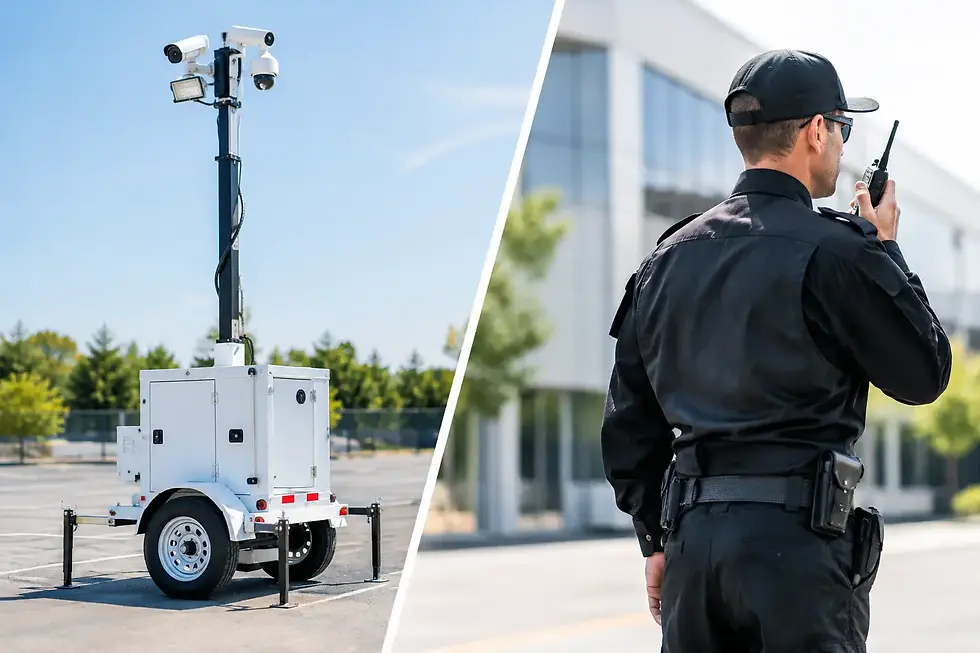
At a dealership, vehicle detection near perimeter gates after closing may be a high priority. For a storage facility, analytics may focus on after-hours access, tailgating at controlled entry points, or activity around individual buildings. At a construction site, perimeter crossing and loitering alerts can be more useful, especially when paired with a mobile security trailer that provides visible coverage where permanent infrastructure is not yet available.
The placement of cameras is just as important as the software. Analytics performs best when cameras have clear lines of sight, appropriate lighting, and views that match the desired detection zone. A camera mounted too high, aimed into bright headlights, or blocked by seasonal vegetation may still record video, but it may not deliver dependable alerting. Site design and installation quality are part of the security strategy.
Weather also requires consideration in Manitoba. Snowfall, fog, early darkness, and changing light conditions can affect any video system. Well-configured analytics can reduce unnecessary activity alerts, but settings should be tested on the actual property and refined over time. Overly sensitive settings create alert fatigue; settings that are too narrow can leave gaps. The right balance depends on the site and its risk level.
Where Video Analytics Delivers Practical Value
The strongest use cases are properties where a delay in detection can become expensive. Construction sites face risks from equipment theft, fuel theft, trespassing, and vandalism. Dealerships need to protect vehicles, keys, parts, and perimeter areas. Commercial properties often need to manage unauthorized access without disrupting legitimate tenants, visitors, and deliveries.
For homeowners, analytics can add useful context to smart security systems. Instead of being alerted every time a branch moves in the wind, homeowners can receive notifications for a person approaching a door, a vehicle entering a driveway, or activity in a defined side-yard area. This does not eliminate the need for sensible physical security, such as proper locks and lighting, but it makes camera alerts more actionable.
Video analytics can also support day-to-day operations. Businesses may use occupancy insights, vehicle counts, or queue activity to understand how spaces are used. Security should remain the primary objective when protecting higher-risk assets, but operational information can be a valuable secondary benefit when it is collected responsibly.
Accuracy Requires a Thoughtful Security Plan
Analytics is not a set-it-and-forget-it feature. A system should be reviewed after installation, especially as seasons, site layouts, and business operations change. New fencing, stacked materials, relocated equipment, or a new traffic pattern can alter what cameras see and how alerts should be configured.
Clear escalation procedures are equally important. Property owners should decide in advance who receives notifications, who has authority to make decisions, and what response is expected for different types of events. A verified after-hours intrusion requires a different response than a delivery truck arriving early. Defined procedures keep security from relying on guesswork.
Privacy and cybersecurity also deserve attention. Cameras should be positioned to protect the property without unnecessarily capturing areas where people reasonably expect privacy. Access to live and recorded video should be limited to authorized users, protected with strong credentials, and managed through a system that receives appropriate updates. Advanced cameras are connected devices, and they should be treated as part of the property's broader security posture.
What to Look for in a Video Analytics Provider
The best provider will not simply sell cameras and turn on a few generic alerts. They should assess the property, identify its highest-risk areas, recommend coverage based on real conditions, and explain how monitoring and response will work when an event occurs.
Look for a partner that can provide local support when adjustments are needed. Security needs can change quickly after a break-in, construction phase change, tenant turnover, or new operational concern. Waiting days for an outsourced support queue is not ideal when a vulnerable area needs attention now.
Guardian Advanced Solutions designs monitored video solutions around the realities of the property, combining advanced detection tools with live human oversight and local Manitoba service. The value is not just in seeing more activity. It is in recognizing the activity that matters and responding with purpose.
Make Camera Coverage More Useful
A camera system becomes far more valuable when it can help identify a potential issue before it becomes a loss. Start by looking at the areas where an intrusion would cause the most disruption: gates, equipment storage, vehicle inventory, rear entrances, loading areas, and isolated corners of the property. Then build detection rules and response procedures around those risks.
The most effective security plan is one that gives the right people useful information at the right moment. When video analytics is paired with reliable live monitoring, thoughtful camera placement, and responsive local support, it can help turn surveillance from a passive record into an active layer of protection.


Comments