
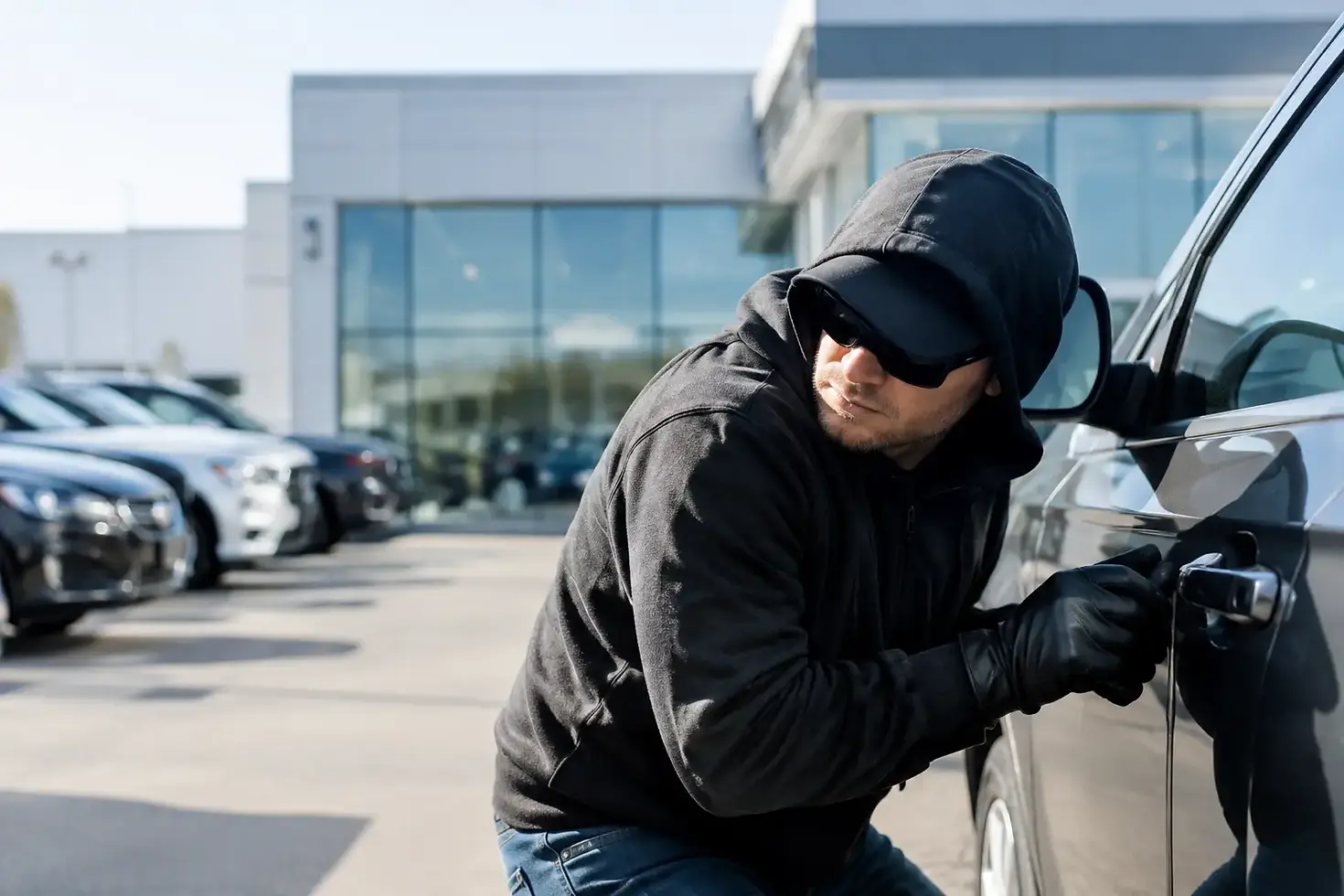
A Dealership Theft Example and What It Reveals
A dealership theft example rarely begins with someone forcing a showroom door in the middle of the day. More often, it starts after closing, when a small weakness becomes an opening: an unsecured perimeter gate, a camera no one is actively watching, or keys that can be reached faster than police can arrive. For dealerships, the loss can extend well beyond one vehicle. It can disrupt sales, damage customer confidence, and expose gaps that invite another attempt.
A Dealership Theft Example: How One Gap Can Escalate
Consider a realistic overnight scenario. A dealership has perimeter cameras, an alarm system, and a fenced vehicle lot. After business hours, two individuals approach the rear of the property, where lighting is limited and sightlines are partially blocked by inventory. They cut or climb the fence, move between rows of vehicles, and test doors without immediately drawing attention.
The first objective may not be a vehicle. It may be access to a key box, a service entrance, or an office where key fobs are stored. If the intruders locate keys, the incident can escalate quickly. A stolen vehicle can be driven through a gate, forced through a fence, or removed before anyone realizes the lot has been breached.
Even when thieves do not get a vehicle, they can cause expensive damage. Broken glass, vandalized ignition systems, damaged gates, stolen tools, and disrupted inventory all create costs. The dealership may also lose time reviewing footage, filing reports, handling insurance documentation, and explaining delays to customers.
This dealership theft example illustrates a hard reality: recording an incident is not the same as stopping it. A camera that captures clear video after a vehicle is gone can support an investigation. Active protection is designed to interrupt the event while there is still time to change the outcome.
Why Dealerships Are Frequent Targets
Vehicle dealerships concentrate valuable, portable assets in open outdoor environments. Inventory is visible from the road, access points can be numerous, and operations often continue beyond standard sales hours through service departments, deliveries, and lot maintenance.
Criminals also understand that many properties rely on a reactive sequence: an alarm trips, a signal is sent, and someone responds after the breach has already occurred. That response may be appropriate for certain locations, but a high-value vehicle lot has different exposure. A few minutes can be enough to reach keys, damage several vehicles, or remove inventory.
The risk changes by dealership type and layout. A small used-car lot may have fewer access points but limited lighting or no overnight staff. A larger franchise dealer may have stronger building security but a much wider perimeter, multiple vehicle compounds, and more key-management activity. There is no single setup that fits every site.
The Weak Points Thieves Look For
Most theft attempts depend on predictable vulnerabilities rather than sophisticated tactics. Thieves look for areas where they can work without being seen or challenged. That may include a rear gate, an employee entrance, a poorly lit inventory row, or a camera positioned too high to identify activity at ground level.
Key control deserves special attention. Vehicles are far harder to steal when keys and fobs are secured, tracked, and inaccessible after hours. Yet key procedures can break down during busy sales periods, service work, staff turnover, or late-day deliveries. A security plan should account for normal human routines, not assume every process will be followed perfectly every night.
False alarms can create another weakness. When a team has received repeated alerts from weather, animals, or minor motion, a real intrusion may not receive the urgency it deserves. Proper camera placement, analytics, and live verification help reduce unnecessary dispatches while keeping meaningful activity visible.
What Active Video Monitoring Changes
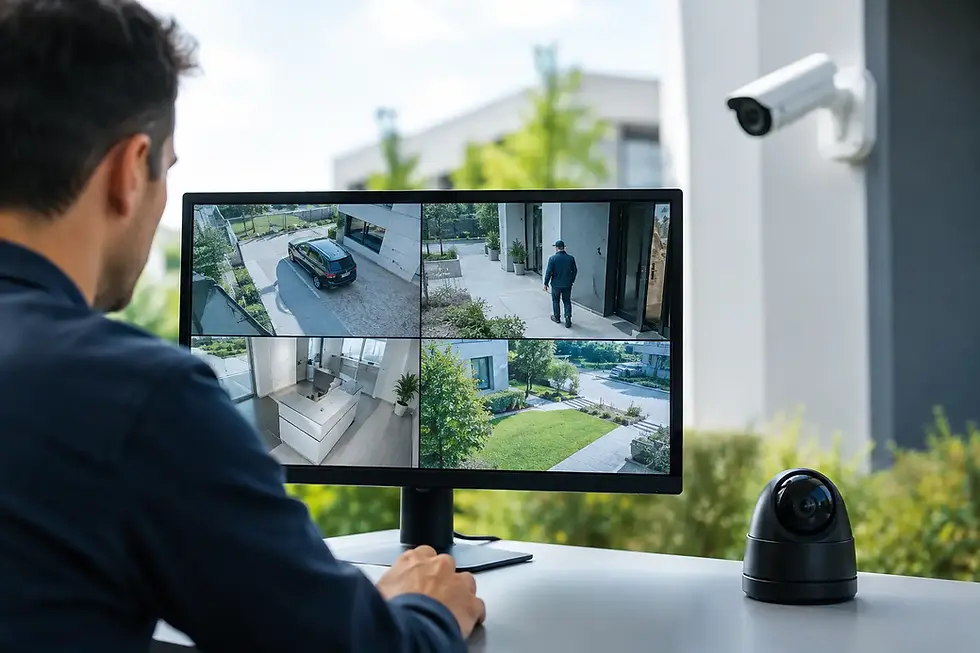
Live video monitoring adds a human layer to the security response. Instead of waiting for a next-day review of recorded video, trained monitoring personnel can assess activity as it happens. If someone enters a restricted area after hours, they can determine whether it is an authorized employee, a delivery driver, or a potential threat.
When suspicious behavior is confirmed, the response can be immediate. Depending on the system design and the situation, this may include issuing an audible warning through on-site speakers, notifying designated contacts, and coordinating an appropriate response. The goal is simple: create pressure early, before a trespasser has time to move deeper into the property.
That distinction matters. A visible camera may deter some opportunistic activity, but determined thieves often know that many cameras are only recording. A monitored system tells a different story. Someone may be watching, assessing, and responding right now.
Live monitoring does not replace good physical security. Fencing, controlled gates, lighting, key management, and alarm systems remain essential. It makes those investments more effective by providing real-time oversight when the dealership is closed and most vulnerable.
Build Protection Around the Way Your Lot Operates
A dealership security plan should start with the property itself. Walk the lot after dark, not only during business hours. Look at what a person can see from the street, where they could enter unnoticed, and how long it would take them to reach high-value areas.
Camera coverage should prioritize more than the front entrance. Effective placement often includes perimeter approaches, gates, vehicle rows, service bays, key storage areas, customer entrances, and any location where vehicles can exit the lot. Clear views matter, but so does camera purpose. A wide overview camera may show movement across the lot, while another camera may be needed to capture identifying detail at a gate or key room.
Lighting supports both safety and surveillance. Dark corners can conceal intruders and reduce the usefulness of recorded video. At the same time, lighting should be positioned carefully to avoid glare, harsh shadows, or conditions that wash out a camera image.
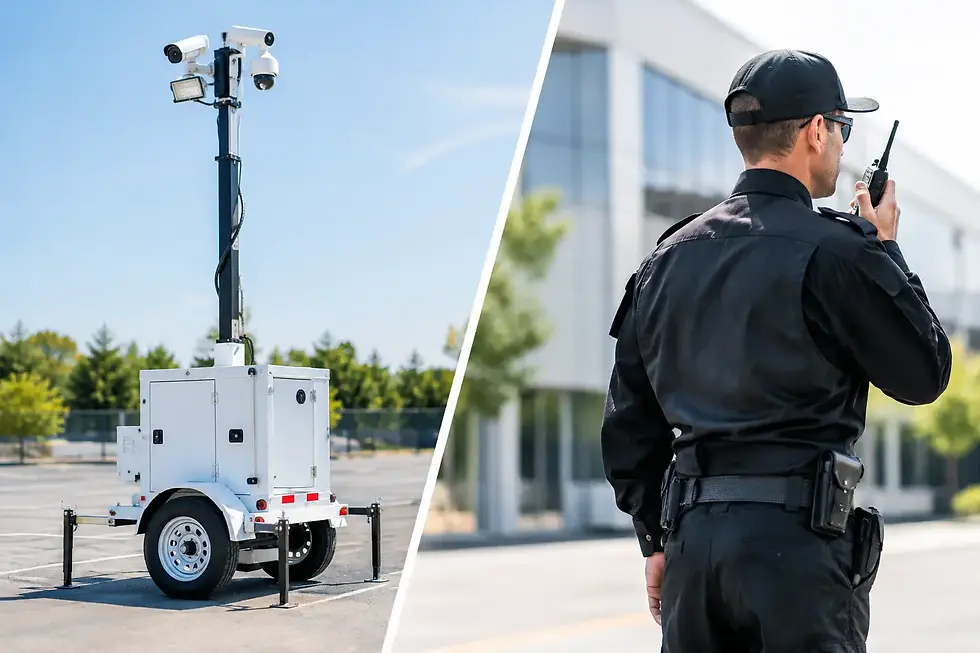
For lots with changing inventory or temporary risk, mobile security trailers can add coverage without waiting for permanent construction. They can be particularly useful during renovations, after a recent incident, or when a dealership is storing overflow vehicles in a separate location.
A Better Response Plan Starts Before an Incident
Technology performs best when the response process is clear. Dealership leadership should decide who receives notifications, what activity warrants escalation, and how employees should handle suspicious behavior during closing or opening hours. These decisions are easier to make before stress and uncertainty are involved.
A practical plan also separates routine activity from genuine risk. A cleaning crew, snow removal team, or late vehicle delivery may be authorized, but monitoring personnel and dealership contacts need enough information to verify that activity. Updated schedules, contact lists, and access procedures help prevent confusion.
After any attempted theft, treat the event as useful intelligence. Review how the person entered, where detection occurred, whether the response was fast enough, and what physical or operational change would make a repeat attempt harder. A broken gate should be repaired, but the larger question is why that gate was the easiest route in.
Guardian Advanced Solutions helps Manitoba dealerships combine live video monitoring, smart alarms, and site-specific protection built around real property risks. Local support matters when a system needs adjustment, a camera view changes, or a dealership needs a fast response after an incident.
A dealership does not need to wait for a stolen vehicle to expose a security weakness. The right time to test the plan is after closing, with an honest view of what the property looks like to someone searching for an opportunity.

Comments